
Air Freight Australia Wide
How Air Freight Connects Major Cities, Regional Centres, and Remote Australia
Air freight keeps Australia moving by linking businesses, industries, and communities across vast distances with speed, reach, and operational flexibility.
Domestic Air Freight in Australia

Written by Jake Dalgarno
Jake Dalgarno is the editorial voice behind snpy.tv, specialising in air freight across Australia. He writes practical, expert-led content that helps readers understand domestic air cargo, urgent freight movement, regional logistics, and the realities of shipping across a vast national network.
Domestic air freight in Australia plays an important role in a country where distance can quickly turn into a logistics problem. For many shipments, road freight remains the more practical and economical option. But when time becomes the deciding factor, air freight offers a faster path that can protect operations, reduce disruption, and keep supply moving across long interstate distances.
That is what makes domestic air cargo so relevant in Australia. It is not simply a premium transport choice. It is a practical response to time pressure. Businesses use it when a shipment cannot afford to sit in a slower delivery cycle, when a regional location needs faster access, or when a delay would create a larger commercial problem than the freight cost itself.
This guide looks at how domestic air freight works in Australia, why businesses rely on it, what affects pricing, how documentation supports movement, and why regional and remote access remains such an important part of the wider air cargo picture.
What Domestic Air Freight Means
Domestic air freight refers to cargo moved by air within the same country. In Australia, that usually means shipments travelling between capital cities, commercial centres, regional towns, and sometimes remote locations where timing matters more than standard delivery speed.
The definition is simple, but the role is more specific than many people first assume. Domestic air freight exists because some cargo cannot wait for slower transport. The shipment may be urgent, operationally important, commercially sensitive, or tied to a fixed delivery window. In those cases, the value of faster movement becomes clear.
This can apply to many different types of freight, including replacement parts, healthcare-related items, technical equipment, retail stock, industrial components, and time-sensitive business cargo. The common factor is not the product category itself. It is the importance of timing.
Why It Matters in Australia
Australia is a large freight environment, and that changes the logic of transport. Major cities are spread far apart, regional access can be more demanding, and some industries operate well beyond dense metro infrastructure. In that kind of setting, delivery speed is not just a convenience issue. It can be an operational issue.
A shipment moving from Sydney to Perth, Melbourne to Brisbane, or Adelaide to Darwin may face a very different timing reality than freight moving through a smaller country. Add regional or remote delivery conditions, and the impact of delay becomes even sharper.
That is why domestic air freight matters. It gives businesses a way to reduce the effect of distance when a shipment needs to arrive within a narrower timeframe. It can help avoid stock shortages, downtime, missed deadlines, and wider service disruption.
How Domestic Air Freight Works
Domestic air freight works through a sequence of connected stages rather than a single transport event. The flight itself is only one part of the process.
It usually begins with booking, where the shipment details are confirmed. These details include origin, destination, weight, dimensions, timing requirements, and any handling considerations. Once booked, the cargo must be packed properly, labelled clearly, and prepared so it can move smoothly through the air freight system.
From there, the shipment enters acceptance and terminal handling. It is received into the freight network, checked against its details, and prepared for uplift. Once the flight departs, the cargo moves to the destination airport, where it is recovered, processed, and released for collection or onward delivery.
The full process usually includes booking, cargo preparation, freight acceptance, terminal handling, aircraft uplift, arrival processing, and final release. That is why air freight should never be understood as simply putting goods on a plane. It depends on coordination from beginning to end.
What Types of Cargo Move by Air
A wide range of goods can move through domestic air freight, but the common feature is usually the need for faster delivery.
Typical examples include urgent replacement parts, engineering components, medical supplies, specialist tools, electronics, retail replenishment stock, perishable commercial goods, and business-critical items that cannot tolerate delay.
The same product may or may not justify air transport depending on the situation. A machine component sitting in storage is ordinary freight. The same component becomes time-sensitive if a worksite is down and waiting for it. That distinction matters because air freight decisions are rarely about the product alone. They are about what happens if the shipment arrives late.
Major Routes Across Australia
Australia’s domestic air freight system is shaped by both economic demand and geography. The strongest flows often involve major cities such as Sydney, Melbourne, Brisbane, Perth, Adelaide, and Darwin. These routes matter because they connect large commercial centres and support time-sensitive freight movement across long distances.
But the system is not limited to major city pairs. Domestic air freight also supports cargo moving from metro areas into regional locations, as well as freight that needs to reach harder-to-serve parts of the country more quickly than road transport can manage.
This broader national role is important. The phrase air freight Australia wide only makes sense because domestic air cargo supports more than just the busiest commercial corridors. It also helps bridge the gap between large cities and the wider Australian freight landscape.
Urgent and Time-Critical Shipments
One of the clearest reasons businesses choose air freight is urgency. Some cargo simply cannot wait for the usual pace of road transport.
This may involve healthcare support items, stock that must be replenished quickly, parts needed to avoid downtime, or deliveries tied to a strict operational deadline. In these situations, the freight decision is not driven only by transport price. It is driven by consequence.
Urgent freight is often misunderstood as something exceptional or dramatic. In reality, many urgent shipments are ordinary goods moving under extraordinary time pressure. The item itself may not be unusual. The business impact of delay is what makes it time-critical.
That is where air freight becomes valuable. It gives businesses a faster response when waiting longer would create greater cost.
Documentation and Freight Accuracy
Documentation is one of the least visible parts of air freight, but it has a direct effect on how smoothly a shipment moves.
The cargo system needs accurate information to identify the shipment, handle it correctly, route it properly, and release it without unnecessary delay. That usually means clear sender and receiver details, accurate origin and destination information, correct weight and dimensions, a usable cargo description, and labels that match the shipment information.
When documentation is accurate, freight is easier to accept, easier to process, and easier to release. When it is vague or inconsistent, delays begin early. That is why documentation should not be seen as an administrative extra. It is part of the movement process itself.
What Affects Pricing
Air freight pricing in Australia is shaped by several factors, not just physical weight.
The main influences usually include actual weight, volumetric weight, chargeable weight, route demand, urgency, cargo type, handling needs, and destination complexity. One of the most important concepts is chargeable weight, which means the shipment may be priced according to either its actual weight or its space-based weight, depending on which is greater.
This matters because aircraft space has value. A bulky shipment can be expensive even if it is relatively light. Urgency also affects pricing because faster and tighter service conditions usually carry a premium.
That does not automatically make air freight poor value. The better question is whether the shipment is important enough that the cost of delay is higher than the freight cost itself.
Regional and Remote Air Freight
Regional and remote Australia are central to the domestic air freight story. Beyond major metro areas, logistics becomes more difficult. Distances feel larger, access becomes less flexible, and delays can be harder to recover from.
In these areas, air freight is not only about speed. It is often about access within a usable timeframe. This can be especially important for healthcare support, industrial operations, specialist equipment, urgent replacement items, and essential commercial supply.
That is one reason domestic air freight has such a distinct role in Australia. It supports not only interstate business movement between major cities, but also continuity in areas where slower delivery may create bigger operational problems.
Air Freight vs Road Freight
Air freight and road freight are both essential, but they serve different priorities.
Road freight is generally the better fit for standard, non-urgent, cost-sensitive, or bulkier shipments. It offers broad coverage and more economical transport for many routine deliveries. Air freight is the stronger choice when time matters more than transport economy, when the route is long, or when delay would create a serious commercial or operational cost.
So the comparison should not be framed as one mode being better overall. The right mode depends on the shipment, the route, the urgency, and the consequences of waiting.
How Businesses Decide
Good freight decisions usually come from a few practical questions.
How urgent is the shipment?
What happens if it arrives late?
Is the cargo compact or bulky?
How far does it need to travel?
Is the destination regional or remote?
Does the shipment require especially careful coordination?
These questions matter more than instinct or habit. They help businesses decide whether air freight is genuinely necessary or whether a slower mode still makes better commercial sense.
Common Misunderstandings
One common mistake is assuming air freight is only for emergencies. That is not true. Many shipments move by air because the timing matters commercially, not because the situation is dramatic.
Another mistake is assuming air freight is always too expensive. That view ignores the cost of delay. In some cases, the higher freight charge protects the business from a much larger loss.
A third misunderstanding is treating the flight as the whole service. In reality, air freight depends on booking accuracy, cargo preparation, documentation, terminal handling, and final delivery coordination. The aircraft is important, but it is only one part of the system.
Final Thoughts
Domestic air freight in Australia is best understood as a time-sensitive logistics solution shaped by geography, urgency, and business consequence. It helps businesses move important cargo faster across long distances, supports urgent deliveries, and strengthens access to regional and remote areas where timing can make a major difference.
It is not the right answer for every shipment, and it is not designed to be the cheapest option. Its value lies in solving a specific problem: getting cargo where it needs to be when waiting longer is no longer acceptable.
That is the real importance of domestic air freight in Australia.
Related Articles
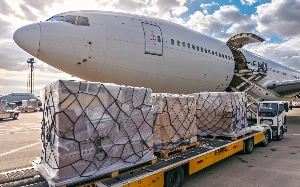
A clear introduction to domestic air freight, including what it means, how it works, and why it matters for urgent and interstate cargo in Australia.

Explore how domestic air cargo moves through Australia, from freight acceptance and handling to flight movement, arrival, and delivery flow.
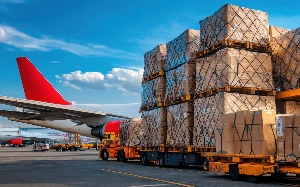
An overview of key domestic air freight routes in Australia, covering major city links, regional corridors, and the role of route demand in cargo movement.
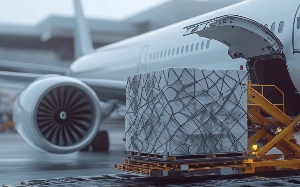
Understand how urgent and time-critical air freight supports fast-moving shipments, priority cargo, and domestic deliveries that cannot afford delay.
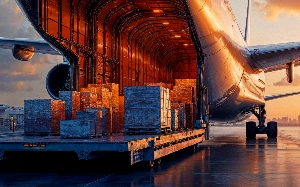
A practical look at the documents and shipment details that help domestic air freight move accurately, safely, and efficiently across Australia.

Learn what shapes air freight pricing in Australia, including chargeable weight, shipment urgency, route demand, and handling requirements.
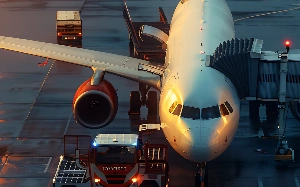
Discover why air freight is essential for regional and remote Australia, where distance, access, and timing can make cargo movement more complex.
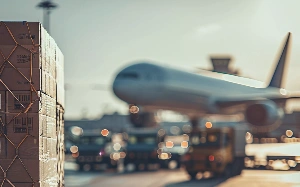
Compare air freight and road freight for domestic deliveries in Australia, including differences in speed, cost, flexibility, and shipment suitability.
SNPY
Australia’s Air Freight Journal
Built with an expert editorial approach, snpy.tv covers air freight Australia wide through useful, relevant, and semantically rich content. Readers can explore how domestic air cargo supports urgent deliveries, interstate trade, regional logistics, and the broader transport network that keeps Australia connected.