
Air Freight Australia Wide
How Air Freight Connects Major Cities, Regional Centres, and Remote Australia
Air freight keeps Australia moving by linking businesses, industries, and communities across vast distances with speed, reach, and operational flexibility.
Domestic Air Freight Routes in Australia

Written by Jake Dalgarno
Jake Dalgarno is the editorial voice behind snpy.tv, specialising in air freight across Australia. He writes practical, expert-led content that helps readers understand domestic air cargo, urgent freight movement, regional logistics, and the realities of shipping across a vast national network.
Domestic air freight routes in Australia are shaped by distance, business demand, airport infrastructure, regional access needs, and the practical realities of moving time-sensitive cargo across a very large country. Some routes are driven by high commercial volume between major cities. Others matter because they connect regional industries, remote communities, or operationally important locations where time is a serious factor.
At first glance, a freight route may seem like a simple origin-to-destination line. In reality, domestic air freight routes reflect a much broader logistics picture. They are influenced by trade flow, population concentration, industrial activity, supply chain pressure, route frequency, and the strategic value of fast cargo movement.
That is why routes matter. They reveal how domestic air freight in Australia actually functions in practice. They show where demand is strongest, where speed matters most, and why some corridors play a more critical role than others.
This article looks at the structure of domestic air freight routes in Australia, the role of major city connections, the importance of regional and remote corridors, and how route logic shapes the movement of air cargo nationwide.
Why Domestic Air Freight Routes Matter
Routes are not just lines on a map. In air freight, they represent movement priorities.
A domestic route matters when it supports one or more of the following:
- strong business demand
- urgent shipment flows
- interstate trade
- regional supply continuity
- remote access
- operationally important cargo movement
- national logistics flexibility
In other words, a route becomes important because of what it enables. A major corridor between two capital cities may carry frequent freight because of commercial volume. A regional route may be important because it supports industries, healthcare access, or urgent deliveries that cannot wait for slower transport modes.
This is especially true in Australia, where geography changes the freight equation. The scale of the country means that route structure has a direct influence on speed, service practicality, and overall logistics performance.
The Core Shape of Australia’s Domestic Air Freight Network
Australia’s domestic air freight network generally revolves around a mix of:
- major metro-to-metro routes
- metro-to-regional routes
- interstate freight corridors
- regional support movements
- remote and specialised access routes
The strongest and most visible part of the network tends to sit between the largest cities, where population, commerce, inventory movement, and industrial demand create consistent freight volume. These routes are often the backbone of domestic air cargo because they connect the country’s main commercial centres.
But that is only one layer of the network. Beyond the major cities, domestic air freight also supports a second layer of movement: shipments that need to reach regional and remote Australia, often under more complex timing and access conditions.
That second layer is one of the reasons air freight has such a distinct role in Australia. The network is not only about busy city corridors. It is also about overcoming the logistics impact of distance.
Major Metro-to-Metro Air Freight Routes
The most recognisable domestic air freight routes in Australia are the major city connections. These are the corridors that link the country’s primary business centres and support a large share of time-sensitive interstate freight movement.
Routes involving cities such as:
- Sydney
- Melbourne
- Brisbane
- Perth
- Adelaide
- Darwin
tend to form the central framework of domestic air cargo activity.
These routes matter because they connect large markets, major airports, strong commercial demand, and significant supply chain activity. Freight moving across these corridors may include urgent stock replenishment, industrial components, retail inventory, critical business supplies, and other cargo where timing affects commercial outcomes.
On these routes, the value of air freight often comes from reducing the impact of distance. A shipment that would otherwise take much longer by road can move through the domestic air network far more quickly when speed becomes a priority.
Sydney as a Key Domestic Freight Origin and Destination
Sydney is one of the most commercially important points in Australia’s domestic freight picture. As a major population centre and business hub, it naturally sits within a high volume of freight movement.
Domestic air freight routes connected to Sydney are important because they support:
- national distribution
- business inventory movement
- urgent interstate freight
- retail replenishment
- time-sensitive commercial cargo
Sydney’s significance also comes from its role in connecting east-coast demand with broader interstate movement. For many businesses, freight moving in or out of Sydney forms part of a wider national supply chain rather than a single isolated shipment.
Melbourne’s Role in Domestic Air Cargo
Melbourne is another major anchor point in Australia’s domestic air freight network. Its economic scale, industrial activity, warehousing relevance, and business density make it a natural participant in key interstate air cargo routes.
Freight movement involving Melbourne often reflects strong demand from commerce, manufacturing-related activity, retail supply, and time-sensitive distribution. This makes Melbourne one of the central cities in discussions around domestic air freight routes in Australia.
Where Sydney and Melbourne are both involved, the freight corridor becomes especially important because it connects two of the country’s largest commercial environments.
Brisbane and the Importance of North-East Freight Movement
Brisbane plays a strong role in domestic air freight due to its position within the national transport landscape and its relevance to Queensland-based supply needs.
Routes involving Brisbane can serve a wide mix of freight priorities, including:
- interstate cargo movement
- regional support logistics
- urgent commercial shipments
- access to northern and broader Queensland freight networks
Brisbane’s role is not limited to large-city connectivity. It also matters because it can function as a key point between metro demand and more dispersed freight requirements.
Perth and Long-Distance Interstate Air Freight
Perth stands out because of distance. Freight moving between Perth and the eastern states often faces a very different logistics calculation than freight moving along shorter east-coast corridors.
This is where domestic air freight becomes particularly relevant. Long road transit may not always align with urgent business needs, and that gives air cargo a stronger role. For shipments where delay is costly, Perth-linked routes can justify air transport more clearly because the time savings are more commercially meaningful.
That makes Perth one of the most strategically important locations in the domestic air freight map. It highlights how route value in Australia is often shaped by geography as much as by freight volume.
Adelaide and Darwin in the Domestic Air Freight Picture
Adelaide and Darwin also matter in the national route structure, though often for slightly different reasons depending on the shipment context.
Adelaide contributes to domestic freight movement through its role in interstate distribution and broader commercial connectivity. Darwin, on the other hand, can become especially relevant in discussions involving distance, northern access, and specialised freight needs.
These cities help show that domestic air freight routes in Australia are not only about the biggest east-coast corridors. They also include a broader national framework where location-specific importance can change the value of air cargo.
East Coast Routes and Freight Density
Some of the strongest domestic air freight activity naturally occurs along the east coast, where large population centres, business concentration, and frequent inventory movement create higher freight density.
East coast routes are important because they tend to support:
- fast commercial replenishment
- regular interstate business movement
- stronger shipment frequency
- short-to-medium domestic transit demand
- tighter supply chain coordination
These routes often feel more active because the underlying economic activity is stronger. But that should not be confused with being the only routes that matter. High-volume corridors are one part of the network. Strategic long-distance and regional routes are another.
Regional Air Freight Routes in Australia
Regional air freight routes are an essential part of the national picture.
They may not carry the same broad commercial visibility as the major metro corridors, but they play a critical role in supporting access, continuity, and time-sensitive movement outside the largest urban centres. In many cases, regional routes matter because the alternative is slower, more difficult, or less practical when timing is important.
Regional domestic air freight may support:
- healthcare-related deliveries
- industrial operations
- regional business supply
- replacement parts
- specialist cargo
- urgent commercial goods
- access to less central markets
This is one of the clearest examples of why air freight in Australia cannot be understood only through big-city thinking. The network is also valuable because it reaches beyond the largest commercial zones.
Remote and Harder-to-Reach Freight Corridors
Remote freight corridors take the route discussion even further.
Australia has locations where distance, infrastructure, and operating conditions can make fast freight movement more challenging. In those cases, air freight is not simply a premium option. It can become one of the most workable options for moving urgent cargo on an acceptable timeline.
These routes may matter for:
- remote operations
- healthcare access
- industrial continuity
- mining-related supply needs
- time-critical replacement items
- essential goods movement
Remote corridors show the true strategic value of air freight. They reveal that route importance is not always about volume. Sometimes it is about necessity.
Route Importance Is Not Only About Distance
A common mistake is assuming that longer routes are always more important for air freight. That is not necessarily true.
Distance matters, but so do:
- urgency
- shipment value
- access limitations
- commercial impact of delay
- airport capability
- route demand
- cargo type
A relatively shorter route can still be highly important if the shipment is urgent enough. A longer route may still not justify air freight if the cargo is low priority and transport economy matters more than timing.
That is why route logic in domestic air freight is never only geographical. It is commercial and operational as well.
What Shapes Demand on Domestic Air Freight Routes?
Demand on domestic air freight routes tends to be shaped by several overlapping factors.
Business Concentration
Cities with stronger economic activity often generate more freight demand.
Supply Chain Pressure
Where businesses need rapid replenishment or continuity, air routes become more relevant.
Industry Mix
Certain industries create stronger demand for fast cargo movement than others.
Distance and Time Sensitivity
The greater the time penalty of using slower transport, the more attractive air freight becomes.
Regional and Remote Access
Some routes matter because they serve places where logistics is inherently more complex.
Airport and Network Connectivity
Not all routes operate within the same infrastructure or movement conditions.
These factors explain why some routes become high-frequency business corridors while others remain strategically important even without the same shipment volume.
How Route Structure Affects Air Freight Planning
Route structure has a direct effect on how domestic air freight is planned and understood.
If a shipment is moving on a strong metro corridor, the planning logic may focus on timing, cut-off alignment, and fast delivery expectations. If the freight is moving on a regional or remote corridor, the planning logic may place more emphasis on access, coordination, and service suitability.
So when businesses think about air freight routes, the better question is not only “Where is the cargo going?” It is also:
- how urgent is the shipment?
- how commercially important is timing?
- what kind of route is this?
- what operational conditions shape the movement?
That is the kind of thinking that turns route knowledge into practical freight understanding.
Air Freight Routes Reflect Broader Supply Chain Priorities
Domestic air freight routes do not exist independently from the rest of the economy. They reflect how goods, businesses, and industries are distributed across Australia.
Major routes often point to strong trade relationships between cities. Regional routes often point to access needs. Long-distance corridors often highlight the role of air freight as a solution to time pressure across a large national footprint.
So in a wider sense, air freight routes tell a story about Australia itself. They show where freight urgency exists, where access matters, and where transport speed changes business outcomes.
That is why route analysis is not just a technical freight topic. It is one of the clearest ways to understand the practical role of domestic air cargo across the country.
Common Misunderstandings About Air Freight Routes
One misunderstanding is thinking that every important route must be a major city pair. In reality, some of the most strategically significant routes are those that support regional continuity or urgent remote access.
Another mistake is assuming that route popularity automatically means route suitability. A route may be active, but that does not mean every shipment belongs on it by air. Cargo decisions still depend on urgency, value, size, timing, and cost sensitivity.
A third mistake is treating routes as static. Domestic freight demand shifts with commercial pressure, operational requirements, and timing needs. The route itself matters, but the freight purpose matters just as much.
Domestic Air Freight Routes in Australia as a Practical System
The best way to understand domestic air freight routes in Australia is to see them as a layered system.
At the top layer are the major metro corridors connecting the country’s largest commercial centres.
At the second layer are the interstate routes where speed helps overcome long distance and supply chain pressure.
At the third layer are the regional and remote corridors where air freight may be essential for access, continuity, or urgent delivery.
Together, these layers form the real domestic air cargo picture. It is not a single network serving one type of shipment. It is a national freight structure supporting different levels of urgency, geography, and operational need.
Final Thoughts
Domestic air freight routes in Australia matter because they show how the national air cargo system actually supports commerce, urgency, and access across a country defined by distance.
Some routes are important because they connect major business centres. Others matter because they reduce the impact of long interstate movement. And some are essential because they support regional or remote freight needs where slower alternatives may not be practical enough.
Understanding these routes gives readers a clearer view of what domestic air freight really is. It is not simply cargo on a plane. It is a route-driven logistics system built around timing, geography, and operational purpose.
For a broader view of the subject, read our main guide to domestic air freight in Australia, where we cover how the system works, what shapes pricing, why urgent cargo moves by air, and how freight flows across Australia’s wider logistics network.
Related Articles
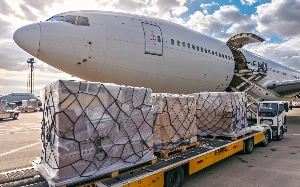
A clear introduction to domestic air freight, including what it means, how it works, and why it matters for urgent and interstate cargo in Australia.

Explore how domestic air cargo moves through Australia, from freight acceptance and handling to flight movement, arrival, and delivery flow.
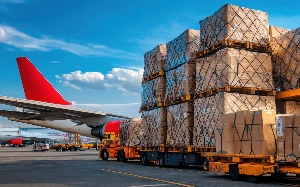
An overview of key domestic air freight routes in Australia, covering major city links, regional corridors, and the role of route demand in cargo movement.

Understand how urgent and time-critical air freight supports fast-moving shipments, priority cargo, and domestic deliveries that cannot afford delay.
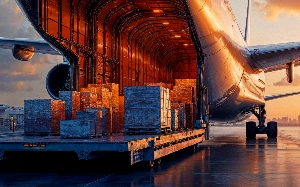
A practical look at the documents and shipment details that help domestic air freight move accurately, safely, and efficiently across Australia.

Learn what shapes air freight pricing in Australia, including chargeable weight, shipment urgency, route demand, and handling requirements.

Discover why air freight is essential for regional and remote Australia, where distance, access, and timing can make cargo movement more complex.

Compare air freight and road freight for domestic deliveries in Australia, including differences in speed, cost, flexibility, and shipment suitability.
SNPY
Australia’s Air Freight Journal
Built with an expert editorial approach, snpy.tv covers air freight Australia wide through useful, relevant, and semantically rich content. Readers can explore how domestic air cargo supports urgent deliveries, interstate trade, regional logistics, and the broader transport network that keeps Australia connected.