
Air Freight Australia Wide
How Air Freight Connects Major Cities, Regional Centres, and Remote Australia
Air freight keeps Australia moving by linking businesses, industries, and communities across vast distances with speed, reach, and operational flexibility.
Regional and Remote Air Freight in Australia

Written by Jake Dalgarno
Jake Dalgarno is the editorial voice behind snpy.tv, specialising in air freight across Australia. He writes practical, expert-led content that helps readers understand domestic air cargo, urgent freight movement, regional logistics, and the realities of shipping across a vast national network.
Regional and remote air freight in Australia exists because not every part of the country operates on the same logistics reality. In major metropolitan areas, freight usually benefits from stronger infrastructure, denser transport options, and more flexible supply chains. Outside those centres, the situation changes. Distance becomes more serious, access becomes less predictable, and the cost of delay often becomes much higher.
That is where air freight takes on a different role.
In regional and remote Australia, air freight is not simply about moving cargo faster than road transport. In many cases, it is about making timely movement possible at all. It helps connect businesses, service providers, healthcare support, industrial operations, and communities to supplies that cannot wait for long surface transit or uncertain delivery windows.
This is one of the most important distinctions in Australian logistics. Air freight in major city corridors is often about speed and efficiency. Air freight in regional and remote areas is often about access, continuity, and operational necessity.
This article explores how regional and remote air freight works in Australia, why it matters, what kinds of cargo depend on it, and why geography changes the role of air cargo so dramatically outside the main metropolitan centres.
Why Regional and Remote Freight Is Different
The first mistake people make is assuming that all domestic freight in Australia follows the same logic. It does not.
A shipment moving between large capital cities usually operates within a more developed and predictable freight environment. There may be more service pathways, stronger route density, more frequent commercial movement, and broader infrastructure support.
Regional and remote freight is different because the transport environment is different. Deliveries may involve:
- longer ground distances
- fewer service options
- less route flexibility
- tighter access conditions
- more operational dependence on timing
- greater consequences when freight is delayed
This is why regional and remote air freight should not be treated as a minor extension of metro logistics. It is a separate operational reality.
What Counts as Regional and Remote in Freight Terms
In logistics, the terms regional and remote are not always identical.
Regional freight usually refers to movement beyond the main metro centres but still within broader serviceable zones connected to regional business activity, industry, agriculture, local distribution, or service networks.
Remote freight goes further. It often refers to locations where access is more limited, infrastructure is thinner, and the practical difficulty of fast freight movement increases sharply.
From an air freight perspective, the distinction matters because the deeper the access challenge, the more valuable air cargo tends to become.
That does not mean every regional shipment belongs on an aircraft. It means that once timing, distance, and access pressure begin to overlap, air freight becomes much more relevant.
Why Air Freight Matters Outside Major Cities
Air freight matters in regional and remote Australia because it helps overcome the main problem that geography creates: time.
In many areas, surface transport remains essential and often works perfectly well for standard deliveries. But when a shipment is urgent, operationally important, or needed within a narrow timeframe, slower transport may no longer be practical.
This is especially true when freight needs to support:
- healthcare continuity
- industrial uptime
- remote site operations
- urgent replacement parts
- specialist equipment movement
- business-critical supply needs
- deliveries where delay creates wider disruption
In these situations, air freight is not chosen because it sounds premium. It is chosen because the timeline changes the decision.
Australia’s Geography Changes Freight Economics
Australia’s geography is not a background detail. It is one of the central reasons regional and remote air freight matters.
Large distances, uneven population distribution, and the spread of commercial activity across both urban and non-urban locations create a freight landscape where surface transport does not always solve the timing problem well enough. That is not a criticism of road freight. It is simply a recognition of what the country demands.
In a smaller and more densely connected market, regional freight might still be handled quickly enough by ground transport. In Australia, the equation is different. A shipment may need to cover a serious distance, move into a less accessible zone, and arrive quickly enough to remain useful.
That combination is exactly where air freight becomes valuable.
Regional and Remote Air Freight Is About Access
One of the best ways to understand this topic is to stop thinking only in terms of speed and start thinking in terms of access.
Access means the practical ability to get a shipment where it needs to go within an acceptable timeframe. In metro freight, access is often assumed. In regional and remote freight, access is a real part of the challenge.
Air freight supports access by reducing the effect of:
- long driving times
- route limitations
- delayed ground movement
- operational distance
- harder-to-serve locations
- supply chain gaps outside the metro network
This is why regional and remote air freight is strategically important. It helps turn difficult locations into reachable ones when timing matters.
What Types of Cargo Rely on Regional and Remote Air Freight?
A wide range of cargo can move through regional and remote air freight channels, but the common theme is that the shipment matters enough for time and access to influence the transport choice.
Typical examples include:
- urgent replacement parts
- engineering components
- healthcare-related supplies
- industrial support equipment
- specialist tools
- high-priority stock replenishment
- maintenance items
- essential business supplies
- time-sensitive commercial goods
The nature of the cargo may vary widely. What makes it suitable for air freight is usually not the product category alone, but the consequences of waiting too long.
That distinction matters. A simple part can become critical if it is needed at the right place, at the right time, and there is no acceptable delay margin.
Healthcare and Essential Supply Support
One of the clearest examples of regional and remote air freight value is healthcare-related movement.
When supplies, equipment, or support items are needed outside the main city network, timing can become especially important. Air freight helps reduce the risk that essential medical or health-support cargo is delayed by long surface transit or difficult route conditions.
This is not only about emergency-style movement. It is also about continuity. Regional and remote areas still require dependable access to important goods, and freight is part of making that possible.
That broader principle applies well beyond healthcare. The farther a location sits from dense logistics infrastructure, the more important dependable freight access becomes.
Mining, Industrial Sites, and Operational Continuity
Regional and remote Australia includes major industrial zones, mining-related activity, and operational sites where downtime can be expensive.
In these environments, urgent freight is often tied directly to continuity. If a critical part, tool, or technical item is needed and surface transport cannot meet the required timeline, air freight becomes a practical response.
This is one of the strongest business cases for regional and remote air cargo. The shipment cost may be higher than slower modes, but the cost of delay may be much higher again.
That is the logic businesses use in these situations. They are not paying more for convenience. They are paying to avoid operational loss.
Air Freight Supports Regional Business Reliability
Regional businesses do not operate outside the pressures of time. They still face customer commitments, supply obligations, stock requirements, and service expectations.
Air freight helps some regional businesses maintain reliability when local supply is not enough or when essential goods need to arrive faster than standard road transport can manage. This can be especially important for businesses that depend on:
- replacement inventory
- technical support items
- urgent commercial supply
- fast access to non-local goods
- continuity during unexpected shortages
In this sense, regional air freight is not only a transport service. It is part of business resilience outside the largest urban markets.
Remote Freight Highlights the Limits of One-Mode Thinking
A common mistake in logistics thinking is to assume one freight mode should handle everything. Remote freight is where that assumption breaks down most clearly.
Road freight remains fundamental to Australia’s supply chain, but there are situations where it is simply too slow for the job at hand. Remote air freight fills that gap. It does not replace surface transport in every case, but it becomes essential when:
- the cargo is urgent
- the destination is difficult
- the delay cost is high
- the delivery window is narrow
- the shipment is operationally important
This is why remote freight forces more disciplined thinking. The right transport mode depends on the situation, not on habit.
The Role of Airports and Regional Connectivity
Regional and remote air freight depends on connectivity. The shipment does not move through a vacuum. It depends on the ability of the freight network to support origin processing, air movement, arrival handling, and onward access where needed.
In practical terms, this means the usefulness of air freight in regional and remote Australia is shaped by:
- airport access
- route availability
- freight handling capability
- timing windows
- ground coordination at destination
- the broader logistics environment surrounding the air segment
This point matters because people sometimes imagine air freight as a single-event solution. It is not. It is part of a chain. The aircraft may be the central speed advantage, but the full service still depends on handling and coordination at both ends.
Why Timing Becomes More Valuable Outside Metro Areas
Timing has value in all freight, but its value increases when access becomes harder.
In metropolitan areas, delays may still be inconvenient, but there are often more ways to absorb them. In regional and remote areas, the same delay may have a larger effect because the freight system is working with fewer alternatives and longer recovery windows.
That means time is not just a convenience factor. It becomes a supply chain risk factor.
Air freight reduces that risk by compressing distance into a shorter transport window. That is why it matters so much in regional and remote Australia. It protects timing where timing is harder to recover once lost.
Challenges in Regional and Remote Air Freight
Regional and remote air freight is valuable, but it is not frictionless.
Some of the practical challenges may include:
- longer pre- or post-flight ground coordination
- more limited service flexibility
- route-specific access pressures
- stricter timing dependence
- capacity limitations in certain contexts
- greater sensitivity to documentation and cargo preparation
- more complex delivery planning beyond the airport
These realities do not make air freight ineffective. They simply mean the service has to be understood properly. The farther freight moves away from dense metro logistics, the more important process quality becomes.
This is where weak planning gets punished. If the shipment details are wrong, the cargo is poorly prepared, or the handling chain is not aligned, the value of speed can be lost before the aircraft advantage fully helps.
Documentation and Preparation Matter Even More
In regional and remote air freight, preparation matters more, not less.
Accurate shipment details, correct labelling, appropriate packaging, and clear handling information all become more important when the delivery path has less room for correction. A minor error in a metro freight environment may still be recoverable fairly quickly. In a more regional or remote setting, the same mistake may cause a bigger disruption.
That is why businesses using air freight into harder-to-serve areas need discipline in:
- booking accuracy
- packaging quality
- weight and dimension accuracy
- destination clarity
- contact information
- timing readiness
Speed only creates value when the shipment is properly prepared to move through the network.
Cost in Regional and Remote Air Freight
Air freight into regional and remote Australia often carries a stronger cost justification than people initially expect, but that does not mean it is cheap.
The service is usually chosen because it solves a timing and access problem that slower transport cannot solve well enough. The key business question is not whether air freight costs more. It usually does. The real question is whether the cost of delay is greater than the freight price.
That may involve avoiding:
- equipment downtime
- interrupted operations
- stock shortages
- service delays
- missed operational windows
- wider business disruption
In these situations, air freight cost is better understood as the price of maintaining continuity.
Regional and Remote Air Freight Is Not Only for Emergencies
Another mistake is thinking regional and remote air freight is only for crisis situations.
In reality, it is often used as a normal business response to non-metro logistics pressure. The shipment may not be dramatic. It may simply need to arrive faster than the surface network can realistically deliver it. That can happen with stock, parts, tools, technical items, or essential support goods.
So while air freight absolutely supports urgent and critical needs, it also supports routine continuity in places where standard transport timing is not always enough.
Air Freight Strengthens National Connectivity
At a broader level, regional and remote air freight strengthens national connectivity.
It helps reduce the gap between major cities and less central locations. It allows businesses, services, and operations outside the main metro zones to remain more connected to supply. And it supports the idea that freight efficiency in Australia cannot be measured only by what happens between capital cities.
This is an important point for understanding domestic air freight in Australia as a whole. The system is not only valuable because it links major commercial hubs. It is also valuable because it extends practical logistics access beyond them.
Common Misunderstandings About Regional and Remote Air Freight
One misunderstanding is assuming that all non-metro freight is automatically remote freight. It is not. There is a difference between regional access and deeply remote logistics, and the freight implications may vary.
Another mistake is thinking air freight is always too expensive to justify outside the cities. That is a shallow view. In many cases, the commercial damage caused by delay is greater than the air freight cost.
A third mistake is assuming remote freight is only about extreme cases. In practice, many shipments are simply ordinary business goods moving under non-ordinary distance and timing conditions.
The common weakness in all these misunderstandings is the same: people underestimate how much geography changes logistics.
Regional and Remote Air Freight as a Strategic Freight Function
The most accurate way to describe regional and remote air freight in Australia is as a strategic freight function.
It exists to support locations where time and access interact in ways that make slower transport less reliable or less commercially acceptable. It helps protect continuity, reduce disruption, and provide faster movement where the supply chain is naturally under more pressure.
That makes it more than a fast transport option. It is part of how Australia manages freight reality beyond the biggest cities.
Final Thoughts
Regional and remote air freight in Australia plays a critical role because it addresses one of the country’s hardest logistics challenges: moving important cargo into less central locations without letting distance destroy the timeline.
For some shipments, road freight remains the right answer. But when access is harder, urgency is higher, or operational consequences are too great to ignore, air freight becomes one of the most valuable tools in the domestic freight system.
That is the real importance of regional and remote air cargo. It does not just move freight quickly. It helps keep supply, service, and business continuity possible beyond the main metro network.
For a broader understanding of the topic, read our main guide to domestic air freight in Australia, where we explore routes, pricing, documentation, urgent cargo, and the wider structure of domestic air transport across the country.
Related Articles
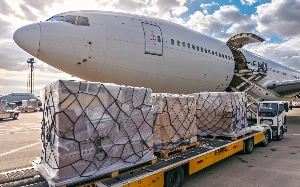
A clear introduction to domestic air freight, including what it means, how it works, and why it matters for urgent and interstate cargo in Australia.

Explore how domestic air cargo moves through Australia, from freight acceptance and handling to flight movement, arrival, and delivery flow.
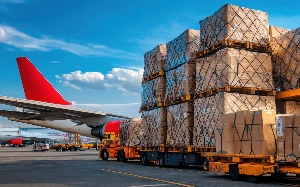
An overview of key domestic air freight routes in Australia, covering major city links, regional corridors, and the role of route demand in cargo movement.
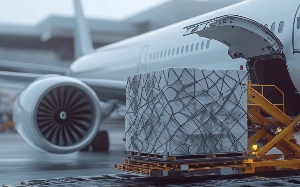
Understand how urgent and time-critical air freight supports fast-moving shipments, priority cargo, and domestic deliveries that cannot afford delay.
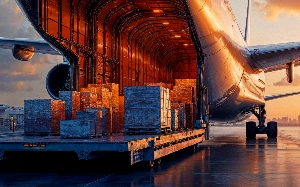
A practical look at the documents and shipment details that help domestic air freight move accurately, safely, and efficiently across Australia.

Learn what shapes air freight pricing in Australia, including chargeable weight, shipment urgency, route demand, and handling requirements.
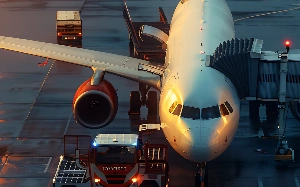
Discover why air freight is essential for regional and remote Australia, where distance, access, and timing can make cargo movement more complex.
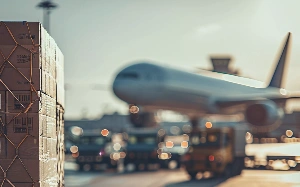
Compare air freight and road freight for domestic deliveries in Australia, including differences in speed, cost, flexibility, and shipment suitability.
SNPY
Australia’s Air Freight Journal
Built with an expert editorial approach, snpy.tv covers air freight Australia wide through useful, relevant, and semantically rich content. Readers can explore how domestic air cargo supports urgent deliveries, interstate trade, regional logistics, and the broader transport network that keeps Australia connected.