
Air Freight Australia Wide
How Air Freight Connects Major Cities, Regional Centres, and Remote Australia
Air freight keeps Australia moving by linking businesses, industries, and communities across vast distances with speed, reach, and operational flexibility.
Air Freight vs Road Freight for Domestic Deliveries

Written by Jake Dalgarno
Jake Dalgarno is the editorial voice behind snpy.tv, specialising in air freight across Australia. He writes practical, expert-led content that helps readers understand domestic air cargo, urgent freight movement, regional logistics, and the realities of shipping across a vast national network.
Air freight and road freight are both essential to domestic deliveries in Australia, but they solve different problems. One is built around speed and time-sensitive movement. The other is built around flexibility, scale, and cost efficiency across the wider ground transport network.
That distinction matters.
A lot of people compare air freight and road freight as if one is simply better than the other. That is the wrong way to think about it. The real question is not which mode is better in general. The real question is which mode makes more sense for the shipment, the timeline, the route, and the commercial consequences of delay.
In Australia, that question becomes even more important because geography changes the freight equation. Distances between major cities are large, regional access can be demanding, and some deliveries lose value quickly if they arrive too late. That is where the comparison between air freight and road freight becomes practical rather than theoretical.
This article explains the difference between air freight and road freight for domestic deliveries, where each mode performs best, and how businesses should think about speed, cost, flexibility, and shipment suitability when choosing between them.
Air Freight and Road Freight Serve Different Priorities
The simplest way to understand the difference is this:
Air freight is built for speed.
Road freight is built for broader transport practicality.
Air freight is usually chosen when time matters enough to justify a faster and more capacity-sensitive mode. Road freight is usually chosen when the shipment can move through a more standard timeframe and where cost efficiency, route flexibility, or general cargo practicality matter more.
That is why the comparison should never be reduced to a surface-level judgment. These two modes are not direct substitutes in every situation. They overlap in some cases, but they are designed around different freight priorities.
What Air Freight Is Best For
Air freight works best when the timeline is tight and the shipment cannot comfortably wait for surface transit.
This often includes situations involving:
- urgent business deliveries
- time-critical replacement parts
- high-priority stock replenishment
- healthcare-related shipments
- long-distance interstate cargo
- regional or remote deliveries where time matters
- goods where delay would create operational disruption
The strength of air freight is not only that it moves faster. Its real strength is that it compresses distance. In a country like Australia, that matters. A shipment moving across a major interstate route can save meaningful time by going through the domestic air network instead of spending much longer in road transit.
That does not make air freight automatically correct. It makes it valuable when time becomes the main variable.
What Road Freight Is Best For
Road freight works best when the shipment does not require the speed of air and when transport practicality matters more than compressed transit time.
This often includes:
- general business freight
- standard replenishment stock
- non-urgent domestic deliveries
- larger or bulkier cargo
- deliveries where cost control matters strongly
- flexible door-to-door movement
- freight that can tolerate normal transit windows
Road freight remains one of the most important parts of domestic logistics because it is versatile, scalable, and suitable for a wide range of cargo types. It does not need to be fast in the same way air freight does. Its value comes from coverage, flexibility, and the ability to move freight through the country’s ground network in a commercially efficient way.
In many cases, road freight is the right answer simply because the shipment does not need anything faster.
Speed: The Most Obvious Difference
Speed is the clearest difference between air freight and road freight.
Air freight is used when the delivery window is narrow enough that road transit may not be good enough. This is especially relevant for long interstate movement, urgent cargo, and deliveries where delay creates a direct business problem.
Road freight is slower, but that is not necessarily a weakness. For many shipments, slower is acceptable. If the goods do not need to arrive urgently, then paying more for speed may not be logical.
This is where many freight decisions go wrong. People treat speed as a universal advantage. It is not. Speed only has value when the shipment actually benefits from arriving sooner.
So the correct question is not “Which is faster?” That answer is obvious. The better question is “Does this shipment need that speed badly enough to justify the trade-off?”
Cost: Where Road Freight Usually Has the Advantage
In most cases, road freight is more economical than air freight for domestic deliveries.
That is because air freight involves:
- faster transport value
- tighter operational timing
- limited aircraft capacity
- greater sensitivity to space and weight
- more premium treatment of time
Road freight generally offers a lower-cost path for standard shipments, especially where delivery urgency is moderate or low. It is often the more commercially sensible choice when the business can tolerate the transit time.
Air freight, on the other hand, tends to cost more because the service is not only moving goods. It is reducing the cost of delay.
That distinction matters. Air freight is expensive if judged only as transport. It becomes more rational if judged against the business consequences of late arrival.
Door-to-Door Practicality
Road freight usually has an advantage in door-to-door practicality.
Because it operates on the ground transport network, it can often move goods more directly from one address to another without needing the same airport-based handling chain that air freight depends on. This makes road freight highly practical for many routine domestic deliveries.
Air freight usually works through a broader logistics sequence that may include:
- origin collection or drop-off
- airport acceptance
- terminal handling
- flight movement
- arrival recovery
- onward delivery or collection
That does not make air freight inconvenient. It simply means it is often part of a more structured chain. The air segment provides the speed advantage, but the total delivery still depends on coordination at both ends.
For that reason, road freight is often better suited to straightforward delivery needs where speed is not the dominant issue.
Distance Changes the Comparison
Australia’s size has a major effect on the comparison between air and road freight.
On shorter routes, road freight may remain highly competitive because the time difference between road and air may not justify the extra cost of flying the shipment. But on longer interstate routes, especially those involving major distances, air freight becomes more attractive when timing matters.
This is where geography starts to favour air freight more clearly. The longer the road transit and the tighter the delivery deadline, the more likely it is that air freight will make commercial sense.
That is one of the reasons domestic air freight in Australia has such a defined role. It becomes especially useful when distance turns road timing into a business risk.
Shipment Type and Cargo Suitability
Not every shipment suits air freight, and not every shipment suits road freight equally well.
Air freight tends to make more sense for cargo that is:
- urgent
- time-sensitive
- relatively compact
- high-priority
- commercially sensitive to delay
- operationally important
Road freight often makes more sense for cargo that is:
- less urgent
- larger or bulkier
- more cost-sensitive
- easier to move through standard delivery windows
- suited to broader ground-based handling and route flexibility
This is not a rigid rule, but it is a useful principle. Cargo selection should reflect the strengths of the transport mode rather than forcing the mode to carry freight it is not commercially suited for.
Bulky Cargo and the Air Freight Problem
Bulky cargo often highlights one of the biggest limitations of air freight.
Because air freight pricing is influenced heavily by both weight and dimensions, large but lightweight cargo can become expensive. Even if the goods are not especially heavy, they may consume too much valuable aircraft space to remain cost-efficient.
Road freight usually handles bulkier cargo more naturally because the pricing and loading environment is less constrained by aircraft space economics. That makes road transport a stronger option for many shipments that are physically large but not urgently time-sensitive.
This is one of the most practical decision points in the air versus road comparison. If the cargo is bulky and not truly urgent, road freight often makes more sense.
Urgency Is Where Air Freight Becomes Strongest
If there is one factor that most clearly shifts a shipment toward air freight, it is urgency.
Air freight becomes especially strong when:
- the cargo is needed quickly
- a delay would create downtime
- stock needs immediate replenishment
- a regional or remote site is waiting on a part
- a strict delivery window must be met
- the commercial cost of waiting is too high
This is where road freight begins to lose the comparison, not because it is ineffective, but because the timeline may no longer fit the problem.
When urgency rises, air freight changes from a premium option into a practical one.
Reliability and Predictability
Both air freight and road freight can be reliable, but reliability means different things in each context.
With road freight, reliability often means consistent movement within expected transit windows across the ground network. With air freight, reliability often means meeting a faster and more time-sensitive movement objective.
Air freight may offer stronger timing value on long-distance urgent shipments, but it also depends on a tightly coordinated process involving acceptance, terminal handling, uplift, arrival, and final release. Road freight may have more flexibility in direct delivery flow, but it operates across a ground network that can involve longer transit exposure.
So reliability should not be judged in abstract terms. It should be judged against the delivery requirement. A reliable road service can still be the wrong option if the shipment is too urgent. A fast air service can still be unnecessary if the cargo does not need that speed.
Regional and Remote Deliveries
Regional and remote deliveries often make the comparison more interesting.
Road freight remains important across non-metro Australia, but the farther a shipment moves into harder-to-serve locations, the more air freight may begin to matter when timing is critical. In some regional and remote situations, the issue is not merely speed. It is access under time pressure.
Air freight can be especially valuable for:
- urgent healthcare-related supplies
- remote operational support
- replacement parts for regional or isolated sites
- business-critical cargo where surface transit is too slow
Road freight, however, remains highly relevant for regional supply where the timing allows it and where cost efficiency is more important than rapid arrival.
So the better conclusion is not that one mode owns regional logistics. It is that regional and remote freight often forces a more precise choice between cost and timing.
Business Continuity and the Cost of Delay
The most intelligent way to compare air freight and road freight is through the cost of delay.
A cheaper road shipment can become the more expensive business decision if late delivery causes:
- production interruption
- equipment downtime
- lost sales
- customer service failure
- stock shortages
- missed project windows
- operational disruption
That is why businesses sometimes choose air freight even when the transport price is much higher. They are not buying freight in isolation. They are buying continuity.
If the shipment can move by road without meaningful consequences, road freight often wins. If delay would cause real damage, air freight often becomes the smarter decision.
Air Freight Is Not Always the Premium Choice
Another common mistake is assuming air freight is simply the premium version of road freight.
That is too simplistic.
Air freight is not always “better.” In some situations it is unnecessary, poorly matched to the cargo, or commercially excessive. If the goods are bulky, non-urgent, and cost-sensitive, road freight is often the better freight decision.
The real value of air freight is not that it is more advanced. Its value is that it solves a specific kind of logistics problem: time pressure across distance.
That is a narrower and more useful definition.
Road Freight Is Not the “Slow” Option in a Negative Sense
Road freight also gets misunderstood.
People sometimes talk about road freight as though it is the inferior option because it is slower. That is poor judgement. Road freight is often the economically correct mode, the more flexible mode, and the more operationally sensible mode for a large share of domestic deliveries.
It handles routine business movement, larger freight volumes, direct transport flow, and standard domestic distribution extremely well. In many cases, using air freight instead would not make the shipment smarter. It would only make it more expensive.
So road freight should not be viewed as the lesser mode. It should be viewed as the right mode for a different set of priorities.
How Businesses Should Choose Between Air and Road Freight
The best freight decisions usually come from asking the right questions.
How urgent is the delivery?
If the timeline is narrow, air freight may be justified.
What happens if the shipment is late?
The greater the consequence, the stronger the case for air.
Is the cargo compact or bulky?
Bulky cargo often fits road freight better unless urgency is extreme.
How far is the shipment travelling?
Long interstate distances often strengthen the case for air when timing matters.
Is cost control more important than speed?
If yes, road freight usually deserves serious preference.
Is the destination regional or remote?
If access is difficult and timing is critical, air freight may offer stronger value.
This is the right way to approach the comparison. Not as a brand preference, but as a problem-solving decision.
Air Freight vs Road Freight in Australia: The Practical Answer
So which is better for domestic deliveries in Australia?
The practical answer is this:
- Road freight is usually better for standard, non-urgent, cost-sensitive, and bulkier deliveries.
- Air freight is usually better for urgent, time-critical, long-distance, and high-priority deliveries where delay has a real cost.
That is the cleanest and most useful conclusion.
It avoids the mistake of turning the comparison into a false contest. Both modes matter. The better choice depends on what the shipment actually needs.
Final Thoughts
Air freight and road freight both play essential roles in domestic deliveries across Australia, but they are built around different priorities. Air freight creates value through speed, urgency response, and reduced delay across long distances. Road freight creates value through flexibility, broader cargo suitability, and cost efficiency across the ground network.
For businesses, the smartest choice is rarely about habit. It is about fit.
If the shipment can travel by road without causing business damage, road freight often makes more sense. If timing is too important to risk a slower mode, air freight becomes one of the most practical tools available.
That is the real comparison. Not fast versus slow, and not premium versus standard, but the right mode for the right delivery.
For a broader understanding of the subject, read our main guide to domestic air freight in Australia, where we explore route structure, urgent cargo, pricing, documentation, and how domestic air transport fits into the wider logistics system.
Related Articles
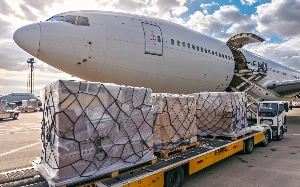
A clear introduction to domestic air freight, including what it means, how it works, and why it matters for urgent and interstate cargo in Australia.

Explore how domestic air cargo moves through Australia, from freight acceptance and handling to flight movement, arrival, and delivery flow.
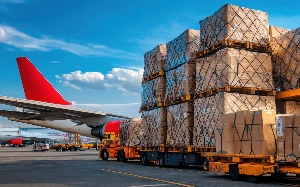
An overview of key domestic air freight routes in Australia, covering major city links, regional corridors, and the role of route demand in cargo movement.
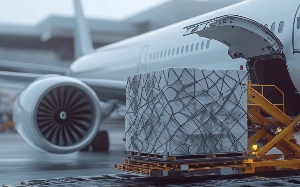
Understand how urgent and time-critical air freight supports fast-moving shipments, priority cargo, and domestic deliveries that cannot afford delay.
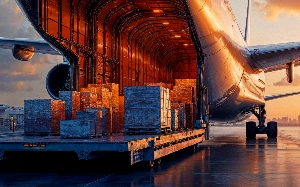
A practical look at the documents and shipment details that help domestic air freight move accurately, safely, and efficiently across Australia.

Learn what shapes air freight pricing in Australia, including chargeable weight, shipment urgency, route demand, and handling requirements.
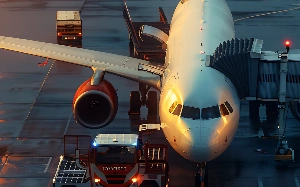
Discover why air freight is essential for regional and remote Australia, where distance, access, and timing can make cargo movement more complex.
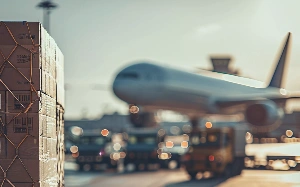
Compare air freight and road freight for domestic deliveries in Australia, including differences in speed, cost, flexibility, and shipment suitability.
SNPY
Australia’s Air Freight Journal
Built with an expert editorial approach, snpy.tv covers air freight Australia wide through useful, relevant, and semantically rich content. Readers can explore how domestic air cargo supports urgent deliveries, interstate trade, regional logistics, and the broader transport network that keeps Australia connected.